
Finding Fort Wayne Residents
Choose the first office from the fact already known. An address belongs first in Allen County COMPS, where a parcel card may identify an owner, parcel number, sale history, neighborhood code, assessment facts, and property images. A name can be tested in the Recorder data index, Indiana MyCase, or an old directory. A birth date and exact name can be checked through Indiana's voter status tool, but that form is a status check rather than an open roll. A year or old address belongs at the Allen County Public Library Genealogy Center.
Each result describes a different relationship. An assessor owner may live elsewhere. A deed party may be a trustee, lender, organization, grantor, or grantee. A directory entry is evidence for its edition year, not today. Court and voter results have their own limits. A sound Fort Wayne directory search labels the source and date before it links facts.
- Normalize the name or street spelling and note the search date.
- Use COMPS to identify the parcel, owner field, and legal description.
- Check the Recorder index for the transfer and prior party names.
- Use Indiana Voters or MyCase only for the distinct fact returned.
- Move to directories, maps, newspapers, or an APRA request when the web trail ends.
Fort Wayne Directory Record Keepers
Allen County offices divide the records that work as resident rolls. The Recorder holds deeds, mortgages, releases, easements, plats, and liens. The Assessor maintains property cards and valuation data. Voter Registration handles registration and precinct matters. Court files belong with the Clerk and Indiana courts, while city legislation and meeting records belong with the Fort Wayne City Clerk. Calling the right custodian is often faster than trying another broad name search.
Allen County Voter Registration
1 E Main Street, Suite 176
Fort Wayne, IN 46802
260-449-7154
Recorder and Assessor counters list weekday hours from 8:00 a.m. to 5:00 p.m. Voter Registration lists 8:00 a.m. to 4:30 p.m. Confirm hours before travel. The Clerk's Central Services Division is at 715 S Calhoun Street, Room 201, and handles record-copy questions at 260-449-7245.
Searching Fort Wayne Parcels
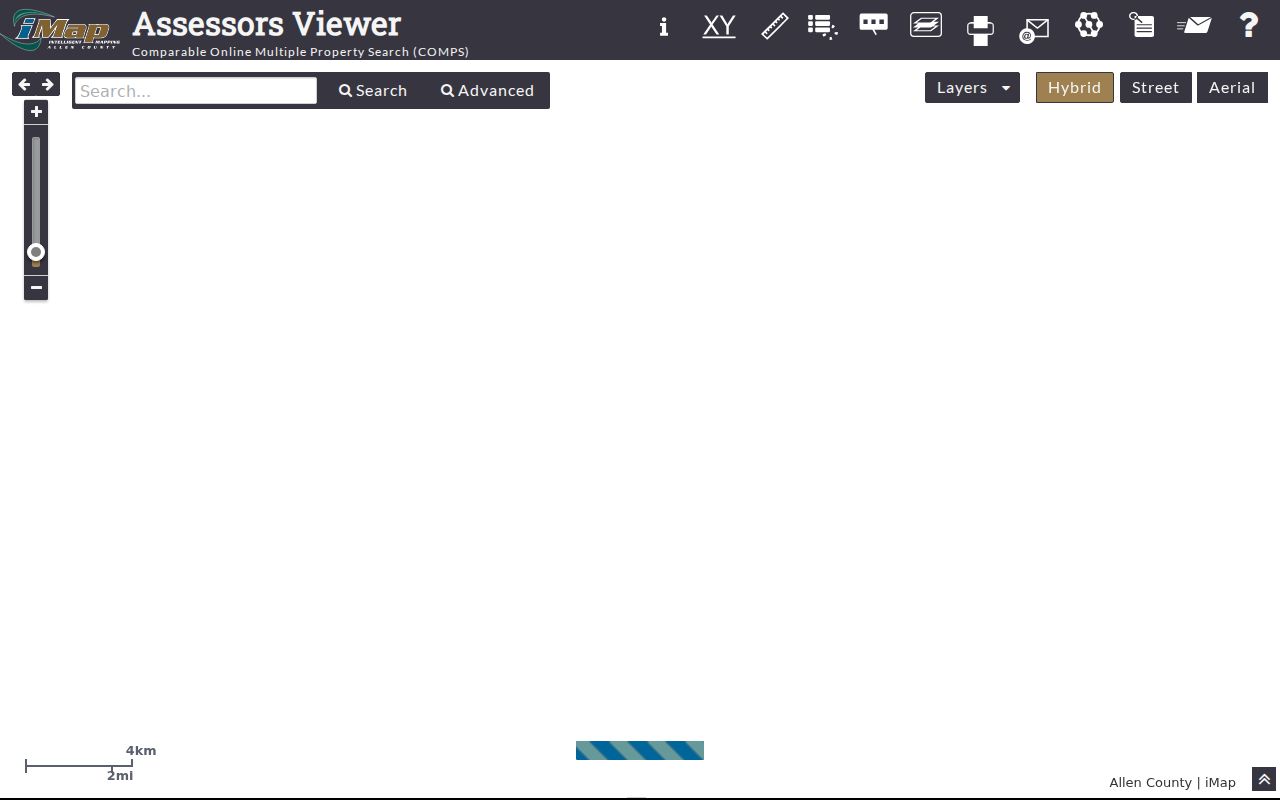
COMPS is the best first stop when a Fort Wayne address is known. Its simple search accepts an address, owner name, or parcel number. County instructions suggest shortening a failed query, such as using a house number and street stem instead of every directional and suffix. Once a parcel opens, inspect Property Information, Assessment Information, Owner Information, Voting Information, and Property Images separately. The tabs expose different facts.
The parcel card may contain an owner and property address, transfer dates and prices, township, neighborhood, lot dimensions, certified values, deductions, effective year built, finished area, and building features. Effective year built can reflect remodeling, so it is not always the original date. Historical aerial layers span 1938 through 2021 and can show changes to a lot, never its occupants.
| COMPS field | Use | Caution |
|---|---|---|
| Property address | Find one parcel | Try a shorter form |
| Owner name | Find owned property | Ownership is not occupancy |
| Parcel number | Resolve a tax parcel | Keep the full number |
| Buyer or seller | Filter sales | Check valid-sales setting |
Open the official COMPS search before viewing the captured interface. The controls distinguish address, owner, and sales queries.
Fort Wayne Deed Index Trails
The Allen County Recorder offers several channels. Free Data Search supplies index data without images. Tapestry EON is a one-time paid route, generally covering documents from 1970 forward and names back to 1950. Current terms list $8.75 per search and $1 per printed page. Laredo is the subscription product closest to the office terminal. Counter, phone, email, and mail remain useful when an old book or image is not online.
The free ACGSI deed index covers many deeds from 1824 through 1903 and 1913 through 1999. It declares a gap for 1904 through 1912. Search nearby years, spelling variants, initials, and spaced surnames, then confirm a claim in the Recorder image or copy. A row is a finding aid, not proof of a household.
- Grantor
- A party transferring an interest.
- Grantee
- A party receiving that interest.
- Parcel
- A mapped unit of land.
- Index
- A list pointing to a record or image.
Review the Recorder search choices before using the screen below.
Current Fort Wayne Directory Sources
No current source lists every Fort Wayne resident. Choose a public roll based on the relationship it records, then corroborate the result. Official tools explain scope and access rules. Commercial compilations may merge old and current data without those distinctions.
| Source | What it confirms | Keeper | Access |
|---|---|---|---|
| COMPS | Owner field and parcel facts | Assessor | Free web map |
| Recorder index | Instrument parties | Recorder | Free data, paid images, counter |
| Indiana Voters | Registration response | Election offices | Exact-name lookup |
| MyCase | Public case activity | Indiana courts | Search and Clerk copies |
| Accela | Permit and code records | City and county | Online categories |
Official records identify the office, field, and date behind a result. Commercial people-finder categories may be quick, but merged addresses and phone ties can be stale. Use an official roll for its intended fact and contact the custodian for a certified or corrected copy.
Use Fort Wayne resident records only for lawful personal research. Never use a name or address result to stalk, harass, threaten, or harm anyone.
Fort Wayne Voter Status Checks
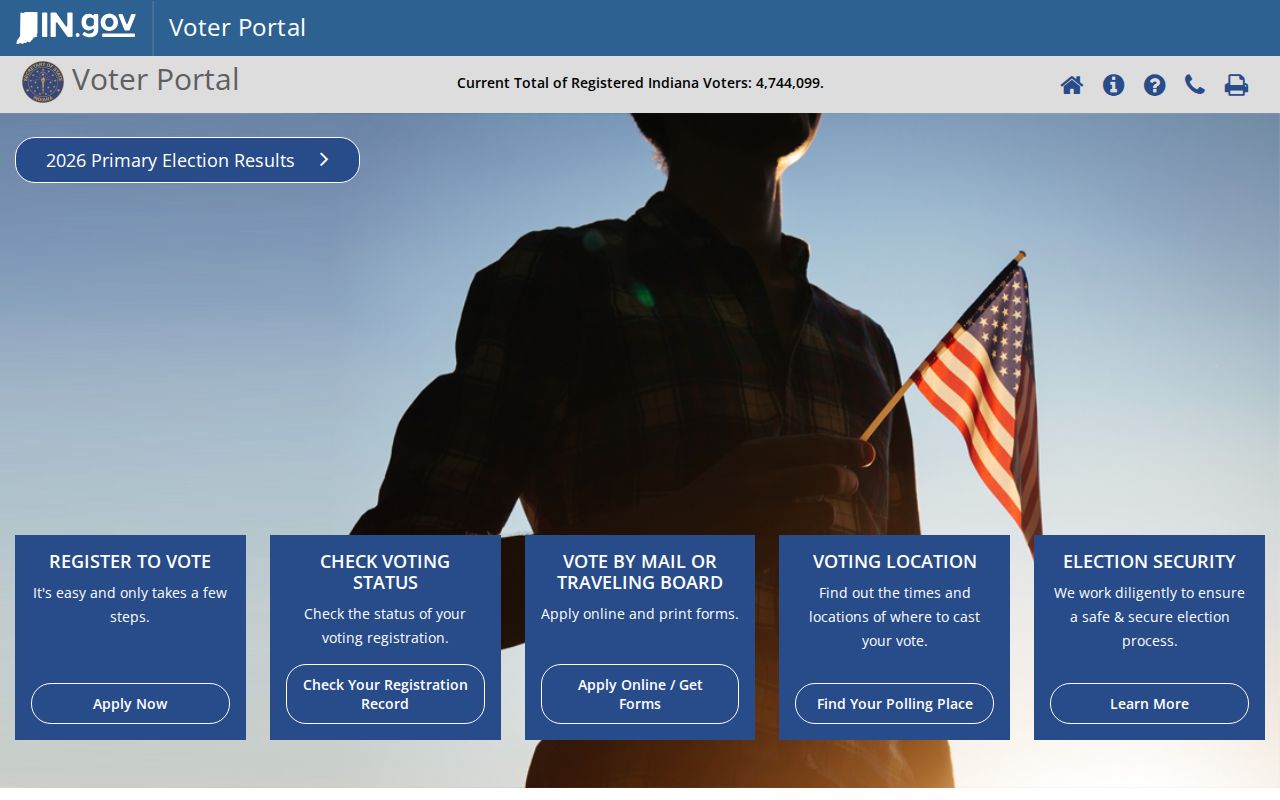
Indiana Voters asks for first name, last name, date of birth, and county. The name must match the record. Initials and suffixes can cause a failed match. Select Allen County. The result can support an exact identity match, but it is not a downloadable Fort Wayne residents directory and does not prove presence at an address.
| Field | Format | Note |
|---|---|---|
| First name | Text, 50 characters | Use registered spelling |
| Last name | Text, 50 characters | Omit suffix |
| Birth date | mm/dd/yyyy | Do not republish |
| County | Required select | Choose ALLEN |
Full data follows the VRG-24 request process and use agreement. Historical poll books may require ACPL, the State Library, Indiana Archives, or a county request. Indiana's Address Confidentiality Program can protect participants with a substitute address, and protected details must not be rebuilt elsewhere.
Check the live voter portal before relying on the image.
Fort Wayne Court Party Records
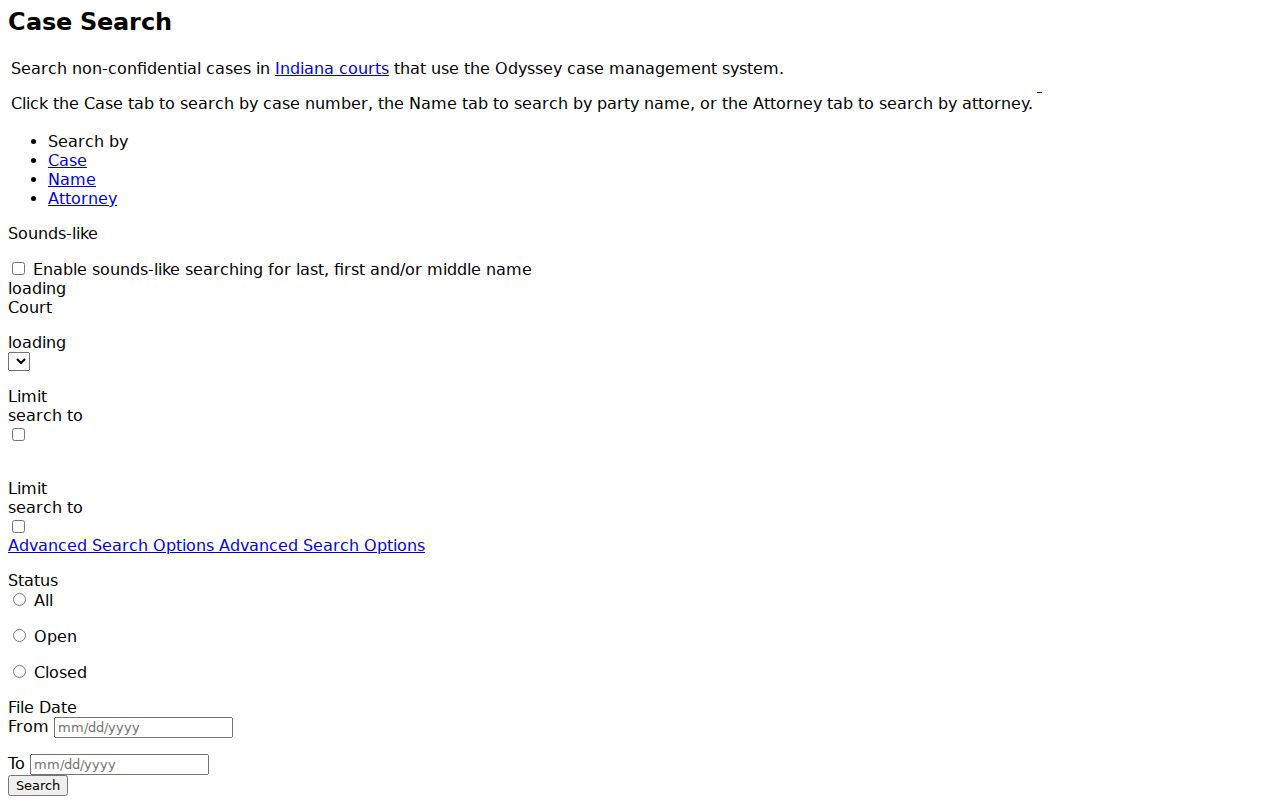
Indiana MyCase can show a public case number, caption, type, parties, attorneys, status, chronological entries, and some documents. Not every court, converted event, file, or document appears. Adoption, juvenile, sealed, and protected cases remain restricted. A same-name result needs a court, date, case type, and another fact before it can be tied to one person.
The Allen County Clerk asks for parties, document, and case number when known. Its copy page lists $1 per page plus $3 per document for certification. Requests may use the Clerk's counter, mail, email, or phone channels. MyCase is a viewing route; the Clerk is custodian for an official county copy.
Open live MyCase before using the captured statewide entry point.
Historical Fort Wayne Residents Directory
The ACPL Genealogy Center holds Fort Wayne city directories from 1858 to the present, with shelf divisions for 1858 through 1998 and 1999 forward. Some editions provide a name index, while later runs include street cross-indexes. ACGSI holdings and the digitized 1858-59 Williams directory offer remote entry points. Entries may list a name, work, spouse or widow notation, and address or intersection.
Read each entry as an observation from one edition. Women, boarders, short-term occupants, and low-volume streets may be missing. A business may have a separate entry. Fort Wayne changed many house numbers around 1898 through 1902, so test an old number against intersections, maps, and parcel geometry. The Fort Wayne city directory collections give a deeper route.
Pair the shelf with deed, census, obituary, newspaper, and map evidence. Public federal census schedules run through 1950. Local birth coverage begins in 1882 inside Fort Wayne but 1887 outside; death coverage begins in 1871 inside and 1907 outside. Those splits may redirect a failed state search to county Health, ACPL microfiche, ACGSI, church, cemetery, or newspaper sources.
Fort Wayne Address Changes
The Fort Wayne grid uses Calhoun Street and the St. Mary's and Maumee rivers as reference lines, with 100 numbers per block. Around the turn of the twentieth century, many house numbers changed. One structure can appear under two numbers without moving.
Begin with the directory year and exact address. Compare ACGSI street history, a same-period city map, and the 1885, 1890, or 1902 Sanborn sheets. Connect the lot to a modern parcel through shape, intersection, legal description, or an owner map. Annexation adds another issue: a place now called Fort Wayne may once appear under a township, village, rural route, or nearby post office.
ZIP codes describe mail delivery rather than city limits. When a street has a ZIP that seems tied to a neighbor community, compare USPS lookup, the city ZIP map, Census geography, annexation maps, and COMPS jurisdiction. The mismatch is a map question, not an error.
Fort Wayne Permit Name Clues
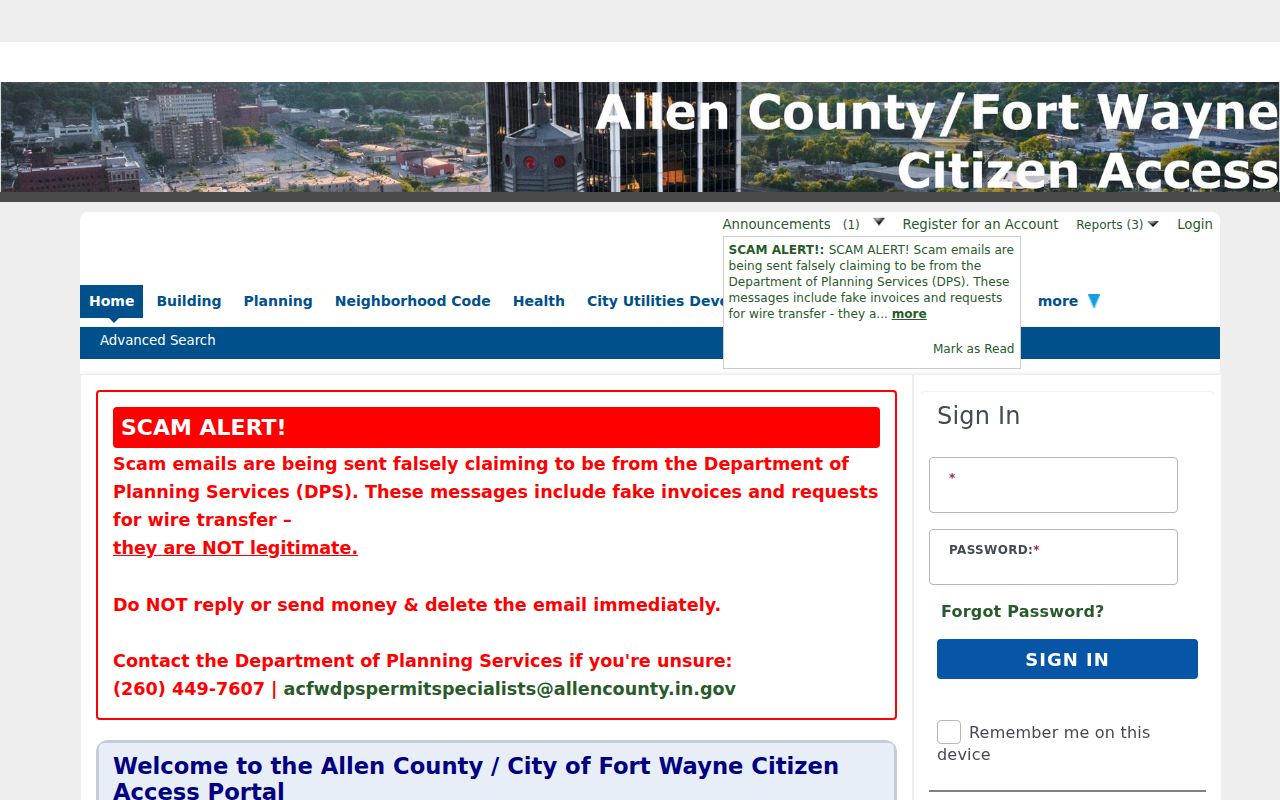
Citizen Access separates permit, planning, code, health, preservation, and development categories. An address result can add an applicant, contractor, case number, work type, date, or status. An applicant is not necessarily an occupant. The City Clerk Agenda Center can add named civic records by phrase, category, board, and date.
When an online category lacks an older record, use the City Clerk, Neighborhood Code Compliance, responsible department, or an APRA request. Ask for an existing record by address, case number, date range, and type. An agency does not have to create a new resident list.
Check live Citizen Access before using the captured portal.
Requesting Fort Wayne Public Records
Indiana's Access to Public Records Act, IC 5-14-3, allows inspection and copying unless an exception applies. A request must describe a record with reasonable particularity. In-person or phone requests receive an initial response within 24 hours. Mail, email, and fax requests receive one within seven calendar days. These are response deadlines, not production promises.
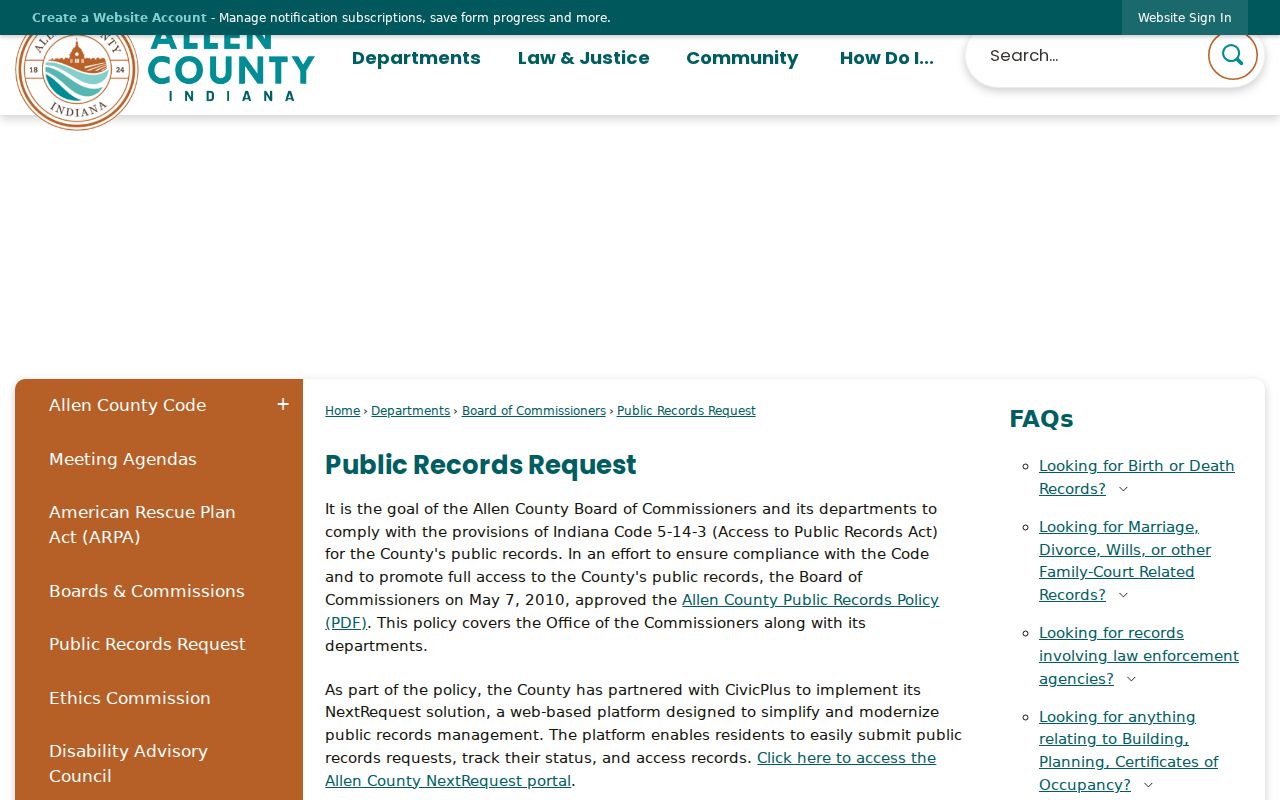
Allen County routes many requests through its request page and NextRequest. City records may go to the City Clerk or keeper department. Inspection generally has no fee, while copy, certification, Recorder, court, and portal charges follow their published rules.
HEA 1360 changes took effect July 1, 2026. The Public Access Counselor describes new controls for electronic portals, high-volume work, identity or residency checks, supplemental charges, and suspected scraping. Date saved instructions and keep requests narrow.
Review county request instructions before using the page shown below.
Fort Wayne Record Privacy Layers
Public access does not mean every field is open. Birth records reach public inspection after 99 years under IC 16-37-1-7.5; newer certified copies require qualifying interest, identification, and proof. Death records permit public non-certified access with Social Security numbers redacted under IC 16-37-1-10(c), while certified copies require eligibility.
Court rules protect sealed and excluded material. Address Confidentiality can substitute a mailing address and protect voter data. BMV personal data has separate limits. A failed search may mean restricted access, unmatched spelling, another custodian, or a source gap. It does not prove someone was never in Fort Wayne.
Keep research narrow. Store only what is needed for family history, estate work, reconnection, consumer safety, or civic inquiry. Verify with the office that made the record, and do not republish birth dates, protected addresses, signatures, or sensitive identifiers.